

Introduction to eHarmony
eHarmony is one of the most well-known dating platforms. eHarmony particularly renowned for its focus on fostering long-term, meaningful relationships.
It is Founded in 2000 by Dr. Neil Clark Warren, a clinical psychologist, the site uses a scientific approach to matchmaking, emphasizing compatibility and shared values.
In this review we will delve into the various aspects of eHarmony, explaining its features, pros and cons, and how it compares to other dating platforms.
eHarmony Sign-Up Process

Sign-Up Process:
How is the signup process. Let,s know in brief.
The sign-up process on eHarmony is detailed and thorough, reflecting its commitment to finding you a compatible match. It starts with a comprehensive questionnaire that covers various aspects of your personality, lifestyle, and preferences. This includes:
- Basic Information: Age, gender, and location.
- Personality Traits: Questions about your habits, likes, dislikes, and values.
- Relationship Goals: What you’re looking for in a partner and your long-term relationship goals.
This process can take around 20-30 minutes but is crucial for eHarmony’s matching algorithm. For example, you’ll answer questions like, “How often do you feel stressed?” or “How important is it to you that your partner shares your religious beliefs?” These questions affect your match preferences. So you have to carefully answer each and every question.
eHarmony User Interface
Once you’re signed up, the user interface is clean and intuitive. The dashboard is straightforward, displaying matches, messages, and profile updates. The navigation is seamless, with clearly labeled tabs for easy access to different sections.
Matchmaking Algorithm
Compatibility Matching System (CMS):
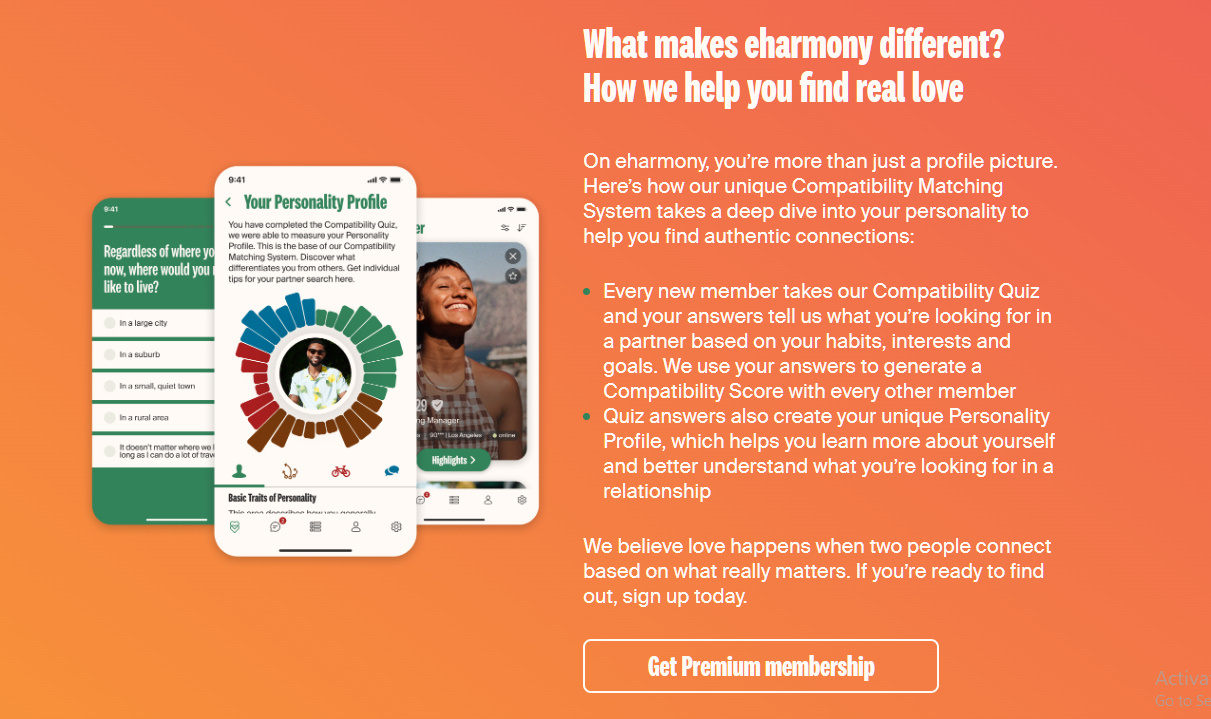
eHarmony’s core strength lies in its Compatibility Matching System (CMS). This algorithm uses the data from your initial questionnaire to match you with compatible partners. It considers 29 dimensions of compatibility, which include emotional temperament, social style, cognitive mode, and physicality.
For instance, if you’re someone who values intellectual conversations, eHarmony’s algorithm will prioritize matches who have indicated a similar interest. This approach ensures that you’re matched with individuals who share your core values and lifestyle preferences, increasing the likelihood of a successful relationship.

Daily Matches:
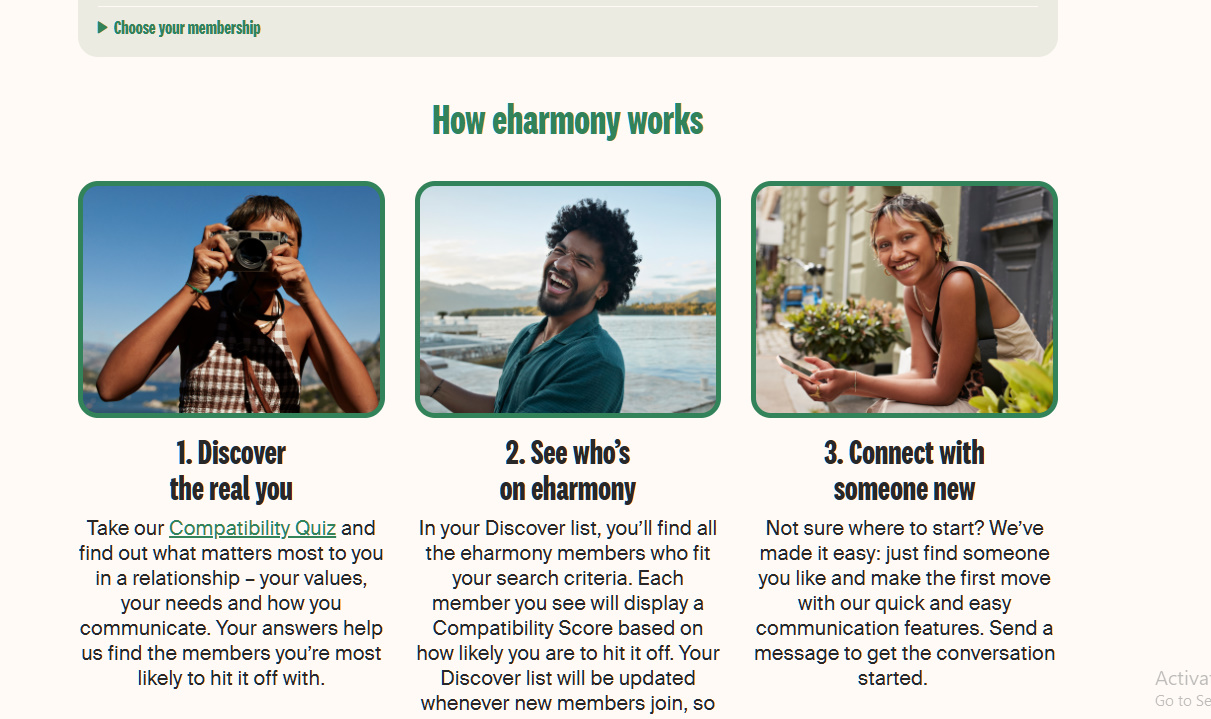
Each day, eHarmony provides a list of matches based on your compatibility scores. This curated list saves you time by narrowing down potential partners to those who align with your personality and relationship goals.
Communication Tools
Guided Communication:
One unique feature of eHarmony is its Guided Communication process. This is designed to help users get to know each other gradually and comfortably. It consists of several steps:
- Icebreakers: Simple questions to get the conversation started.
- Pre-Written Questions: Choose from a list of questions to send to your match.
- Digging Deeper: Share your answers to more personal questions.
- Direct Messaging: Once you’re comfortable, you can start exchanging messages freely.
For example, you might start with a question like, “What’s your favorite way to spend a weekend?” and gradually move to more personal inquiries such as, “What are your most important life goals?”
Video Dating:
In response to the increasing demand for virtual interactions, eHarmony has introduced a video dating feature. This allows you to have face-to-face conversations without leaving the platform, adding a layer of personal connection that’s often missing in text-based communication.
Membership Options and Pricing
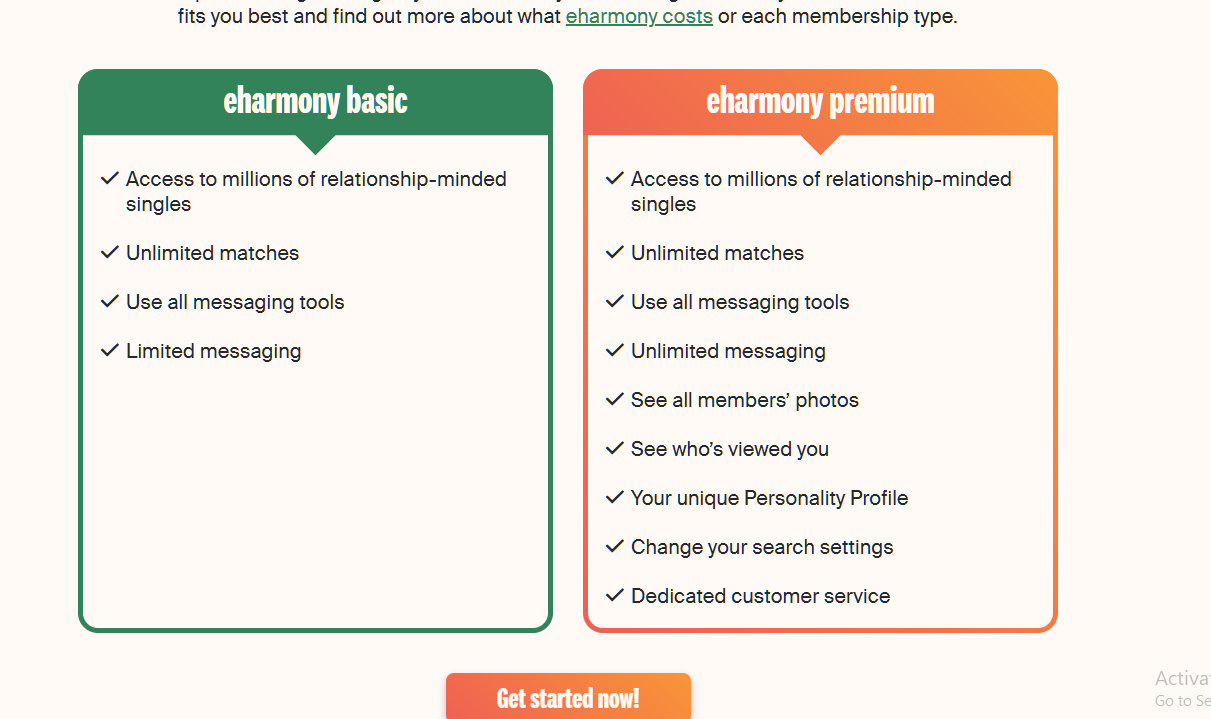
eHarmony offers both free and premium memberships. While the free version allows you to create a profile and view your matches, communication features are limited. To get the full experience, a premium membership is recommended.
Premium Membership Tiers:
- Premium Light (6 months): Offers basic features and costs around $59.90 per month.
- Premium Plus (12 months): Provides a better value at approximately $35.90 per month.
- Premium Extra (24 months): The most cost-effective option, costing about $25.90 per month.
Premium members get access to unlimited messaging, detailed personality reports, and the ability to see who viewed their profile.
Success Stories and User Testimonials
eHarmony has a high success rate in creating long-term relationships. The site claims that 438 people get married every day thanks to eHarmony’s matchmaking. Numerous user testimonials attest to the effectiveness of the platform. For instance, one user might share a story about how they met their spouse after years of unsuccessful dating on other platforms, highlighting eHarmony’s superior matching system.
Comparison with Other Dating Sites
eHarmony vs. Match.com:
- Matching Algorithm: eHarmony’s algorithm is more comprehensive and scientifically grounded compared to Match.com, which offers more general search and match capabilities.
- User Base: Match.com has a larger and more diverse user base, but eHarmony’s users are more focused on serious relationships.
eHarmony vs. Tinder:
- Purpose: Tinder is geared more towards casual dating and short-term interactions, while eHarmony is focused on long-term relationships.
- User Experience: Tinder offers a quick and easy swiping experience, whereas eHarmony requires a more significant time investment up front.
eHarmony vs. Bumble:
- Communication: Bumble requires women to initiate the conversation, which can empower female users but might limit interactions. eHarmony’s guided communication is more structured and gradual.
- Demographics: Bumble attracts a younger crowd, while eHarmony is more popular among those seeking serious relationships in their late 20s and older.
Pros and Cons
Pros:
- Comprehensive Matching System: The detailed questionnaire and algorithm increase the chances of finding a compatible match.
- Focus on Long-Term Relationships: Ideal for those looking for serious commitments.
- User-Friendly Interface: Easy navigation and clean design.
- Video Dating: Enhances the connection before meeting in person.
Cons:
- Time-Consuming Sign-Up: The lengthy questionnaire can be a deterrent for some users.
- Cost: Premium membership is relatively expensive compared to other dating sites.
- Limited Free Features: Most useful features require a paid subscription.
Conclusion and Rating
In conclusion, eHarmony stands out as a premier dating site for those seeking serious, long-term relationships. Its scientifically-backed matching system, detailed profiles, and structured communication process set it apart from many other dating platforms. While it requires a significant time investment upfront and is on the pricier side, the potential for finding a meaningful relationship is high.
Rating: 9/10
Compared to other dating sites, eHarmony excels in creating lasting connections. While platforms like Tinder and Bumble cater to different dating needs, eHarmony’s focus on compatibility and long-term success makes it a top choice for those serious about finding a partner.