
eHarmony: A Comprehensive Review

eHarmony

Introduction to eHarmony

eHarmony is one of the most well-known dating platforms. eHarmony particularly renowned for its focus on fostering long-term, meaningful relationships.

It is Founded in 2000 by Dr. Neil Clark Warren, a clinical psychologist, the site uses a scientific approach to matchmaking, emphasizing compatibility and shared values.

In this review we will delve into the various aspects of eHarmony, explaining its features, pros and cons, and how it compares to other dating platforms.

eHarmony Sign-Up Process

Sign-Up Process:

How is the signup process. Let,s know in brief.

The sign-up process on eHarmony is detailed and thorough, reflecting its commitment to finding you a compatible match. It starts with a comprehensive questionnaire that covers various aspects of your personality, lifestyle, and preferences. This includes:

  • Basic Information: Age, gender, and location.
  • Personality Traits: Questions about your habits, likes, dislikes, and values.
  • Relationship Goals: What you’re looking for in a partner and your long-term relationship goals.

This process can take around 20-30 minutes but is crucial for eHarmony’s matching algorithm. For example, you’ll answer questions like, “How often do you feel stressed?” or “How important is it to you that your partner shares your religious beliefs?” These questions affect your match preferences. So you have to carefully answer each and every question.

eHarmony User Interface

Once you’re signed up, the user interface is clean and intuitive. The dashboard is straightforward, displaying matches, messages, and profile updates. The navigation is seamless, with clearly labeled tabs for easy access to different sections.

Matchmaking Algorithm

Compatibility Matching System (CMS):

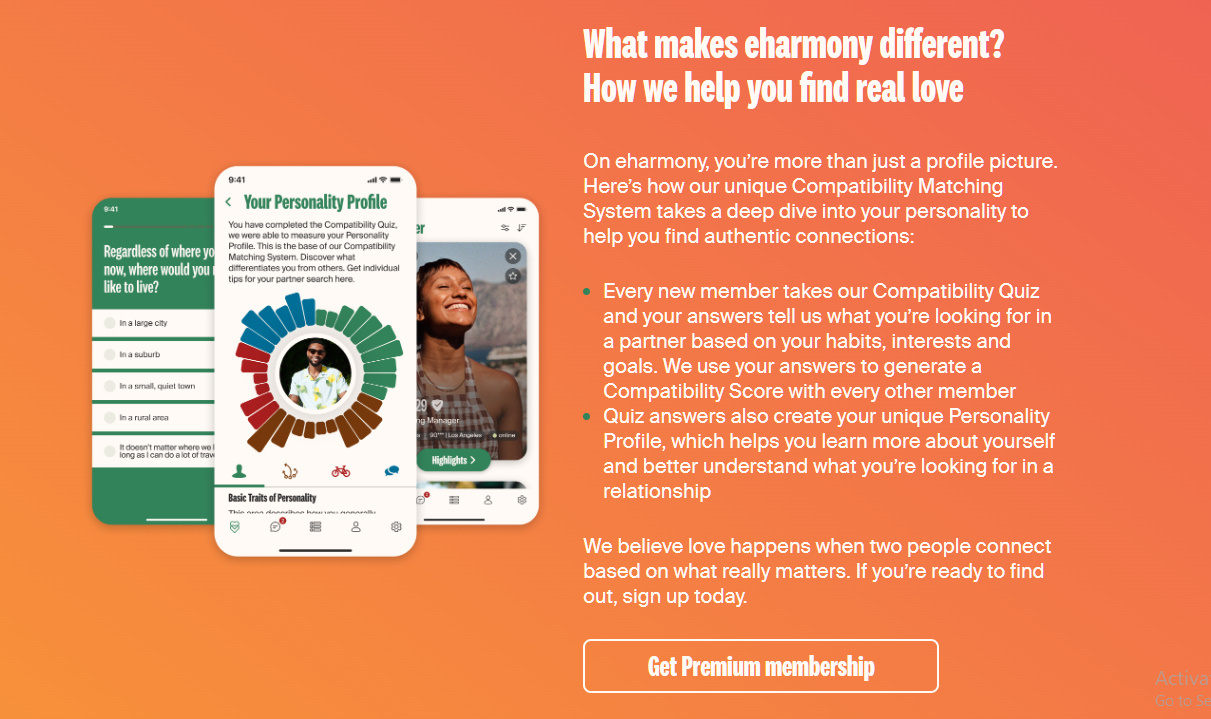
eHarmony’s core strength lies in its Compatibility Matching System (CMS). This algorithm uses the data from your initial questionnaire to match you with compatible partners. It considers 29 dimensions of compatibility, which include emotional temperament, social style, cognitive mode, and physicality.

For instance, if you’re someone who values intellectual conversations, eHarmony’s algorithm will prioritize matches who have indicated a similar interest. This approach ensures that you’re matched with individuals who share your core values and lifestyle preferences, increasing the likelihood of a successful relationship.

Daily Matches:

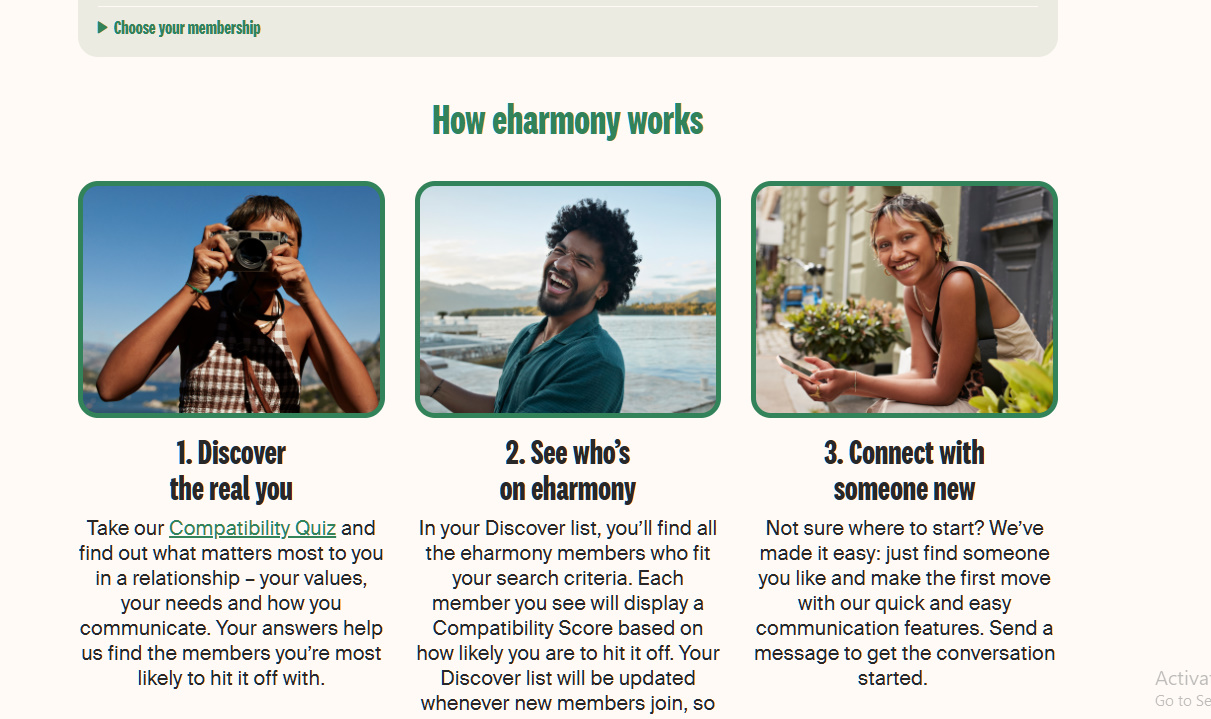
Each day, eHarmony provides a list of matches based on your compatibility scores. This curated list saves you time by narrowing down potential partners to those who align with your personality and relationship goals.

Communication Tools

Guided Communication:

One unique feature of eHarmony is its Guided Communication process. This is designed to help users get to know each other gradually and comfortably. It consists of several steps:

  1. Icebreakers: Simple questions to get the conversation started.
  2. Pre-Written Questions: Choose from a list of questions to send to your match.
  3. Digging Deeper: Share your answers to more personal questions.
  4. Direct Messaging: Once you’re comfortable, you can start exchanging messages freely.

For example, you might start with a question like, “What’s your favorite way to spend a weekend?” and gradually move to more personal inquiries such as, “What are your most important life goals?”

Video Dating:
In response to the increasing demand for virtual interactions, eHarmony has introduced a video dating feature. This allows you to have face-to-face conversations without leaving the platform, adding a layer of personal connection that’s often missing in text-based communication.

Membership Options and Pricing

eHarmony offers both free and premium memberships. While the free version allows you to create a profile and view your matches, communication features are limited. To get the full experience, a premium membership is recommended.
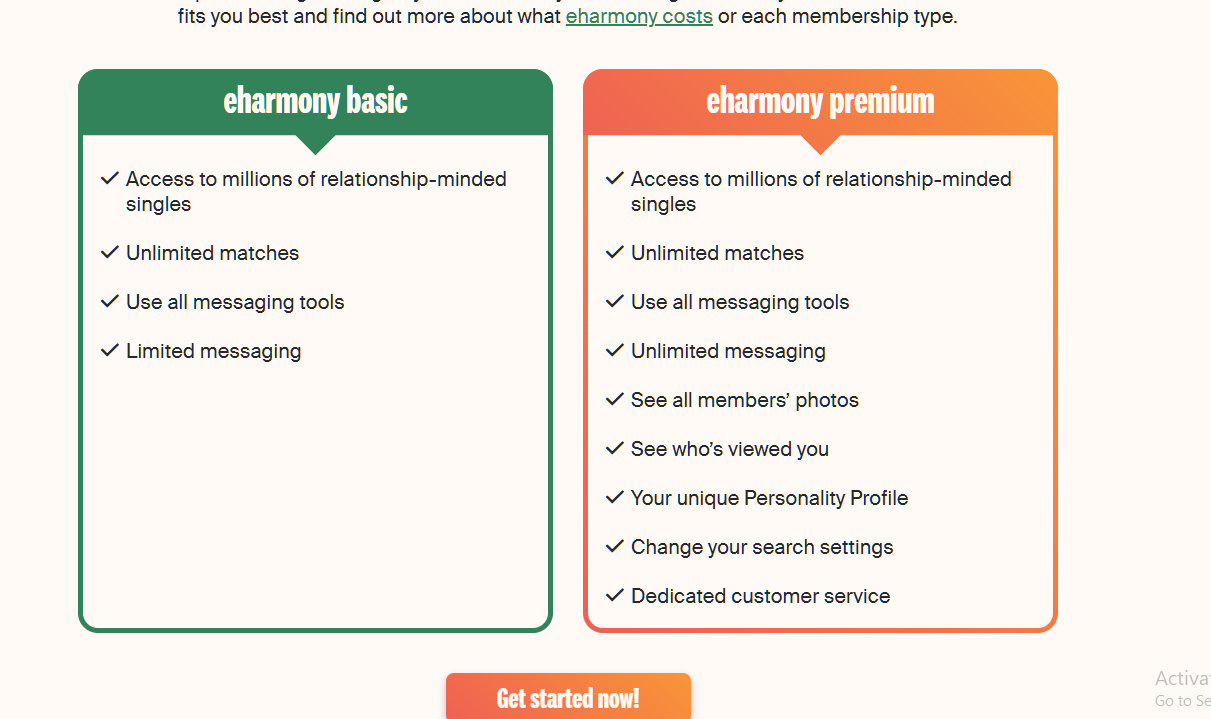
Premium Membership Tiers:

  1. Premium Light (6 months): Offers basic features and costs around $59.90 per month.
  2. Premium Plus (12 months): Provides a better value at approximately $35.90 per month.
  3. Premium Extra (24 months): The most cost-effective option, costing about $25.90 per month.

Premium members get access to unlimited messaging, detailed personality reports, and the ability to see who viewed their profile.

Success Stories and User Testimonials

eHarmony has a high success rate in creating long-term relationships. The site claims that 438 people get married every day thanks to eHarmony’s matchmaking. Numerous user testimonials attest to the effectiveness of the platform. For instance, one user might share a story about how they met their spouse after years of unsuccessful dating on other platforms, highlighting eHarmony’s superior matching system.

Comparison with Other Dating Sites

eHarmony vs. Match.com:
  • Matching Algorithm: eHarmony’s algorithm is more comprehensive and scientifically grounded compared to Match.com, which offers more general search and match capabilities.
  • User Base: Match.com has a larger and more diverse user base, but eHarmony’s users are more focused on serious relationships.

eHarmony vs. Tinder:

  • Purpose: Tinder is geared more towards casual dating and short-term interactions, while eHarmony is focused on long-term relationships.
  • User Experience: Tinder offers a quick and easy swiping experience, whereas eHarmony requires a more significant time investment up front.

eHarmony vs. Bumble:

  • Communication: Bumble requires women to initiate the conversation, which can empower female users but might limit interactions. eHarmony’s guided communication is more structured and gradual.
  • Demographics: Bumble attracts a younger crowd, while eHarmony is more popular among those seeking serious relationships in their late 20s and older.

Pros and Cons

Pros:

  1. Comprehensive Matching System: The detailed questionnaire and algorithm increase the chances of finding a compatible match.
  2. Focus on Long-Term Relationships: Ideal for those looking for serious commitments.
  3. User-Friendly Interface: Easy navigation and clean design.
  4. Video Dating: Enhances the connection before meeting in person.

Cons:

  1. Time-Consuming Sign-Up: The lengthy questionnaire can be a deterrent for some users.
  2. Cost: Premium membership is relatively expensive compared to other dating sites.
  3. Limited Free Features: Most useful features require a paid subscription.

Conclusion and Rating

In conclusion, eHarmony stands out as a premier dating site for those seeking serious, long-term relationships. Its scientifically-backed matching system, detailed profiles, and structured communication process set it apart from many other dating platforms. While it requires a significant time investment upfront and is on the pricier side, the potential for finding a meaningful relationship is high.

Rating: 9/10

Compared to other dating sites, eHarmony excels in creating lasting connections. While platforms like Tinder and Bumble cater to different dating needs, eHarmony’s focus on compatibility and long-term success makes it a top choice for those serious about finding a partner.


Breaking Stereotypes in Modern Parenting

"Parents and children breaking stereotypes and embracing diversity in modern parenting."

In the ever-evolving landscape of parenthood, it’s essential to recognize and dispel outdated stereotypes. Parenting today is not what it used to be, and it’s time to leave these misconceptions in the past. Join us as we explore the 16 stereotypes that modern parents should bid farewell to.

Introduction: Rethinking Modern Parenting

Parenting has come a long way from the days of strict gender roles and conventional norms. In this article, we’ll delve into the stereotypes that no longer hold true in today’s diverse and dynamic world of parenting. Let’s challenge these misconceptions and embrace a more inclusive, open-minded approach to raising children.

Stereotype 1: “Moms Should Always Stay at Home”

do moms always need stay at home ?

Gone are the days when mothers were expected to be the sole caregivers. Modern parenting acknowledges that both parents can contribute equally to their children’s upbringing.

Stereotype 2: “Dads Aren’t Nurturing”

Modern fathers are actively involved in their children’s lives, proving that nurturing isn’t exclusive to mothers.

Stereotype 3: “Children Must Excel in Everything”

Pressuring children to excel in every aspect of life can lead to burnout. It’s crucial to let kids explore their interests at their own pace.

Stereotype 4: “Only Women Can Be Emotional”

Emotions are not gender-specific. Encouraging emotional expression in boys is vital for their mental well-being.

Stereotype 5: “Girls Should Play with Dolls, Boys with Trucks”

girls playing dolls

Toys and activities should not be limited by gender. Let children explore their interests freely.

Stereotype 6: “Parents Must Have All the Answers”

Parents are not infallible. It’s okay to admit when you don’t have all the answers and seek guidance when needed.

Stereotype 7: “Single Parents Can’t Provide Enough”

Single parents are fully capable of providing love, care, and stability to their children.

Stereotype 8: “Teenagers Are Always Rebellious”

Teenagers can be responsible and respectful when they receive understanding and trust from their parents.

Stereotype 9: “Strict Discipline Is Always Effective”

Overly strict discipline can stifle a child’s development. Balancing discipline with understanding is key.

Stereotype 10: “Parents Must Sacrifice Everything”

Self-care is essential for parents. Taking care of your well-being benefits both you and your children.

Stereotype 11: “Working Moms Are Neglecting Their Children”

Working moms can provide a positive role model for their children, showcasing the value of hard work and dedication. Read The related questions here.

Stereotype 12: “Stay-at-Home Dads Are Lazy”

Dads are lazy
Dads are lazy

Stay-at-home dads contribute significantly to their children’s upbringing, demonstrating that caregiving is not gender-specific.

Stereotype 13: “Adopted Children Are Different”

Adopted children are as much a part of the family as biological children and deserve the same love and support.

Stereotype 14: “Only Wealthy Parents Can Provide Opportunities”

Opportunities for growth and development are not limited to financial means. Quality time and support matter most.

Stereotype 15: “Parents Should Control Their Children’s Lives”

Allowing children to make choices and learn from their mistakes fosters independence and resilience.

Each child is unique, and parenting approaches should adapt to their individual needs.

Conclusion: Embracing Modern Parenthood

In conclusion, modern parenting is a dynamic, evolving journey that breaks free from outdated stereotypes. Embrace diversity, nurture emotional well-being, and empower your children to thrive in an ever-changing world.

FAQs

1. What is the importance of challenging stereotypes in parenting?

Challenging stereotypes in parenting promotes inclusivity, emotional well-being, and individuality among children, leading to healthier family dynamics.

2. How can parents encourage gender-neutral play?

Parents can encourage gender-neutral play by offering a wide range of toys and activities, avoiding gendered labels, and supporting their children’s choices.

3. Is it okay for parents to seek professional help when facing challenges in parenting?

Yes, seeking professional help is a sign of responsible parenting. It can provide valuable insights and strategies for addressing parenting challenges effectively.

4. How can parents balance work and family life effectively?

Balancing work and family life involves setting boundaries, prioritizing quality time, and seeking support from a strong support network.

5. Why is it essential for parents to prioritize self-care?

Prioritizing self-care enables parents to recharge, reducing stress and burnout. It also sets a positive example for children about the importance of self-care.

Weekend Marriage: Weighing the Pros and Cons.

groom and bride decorated with flower garlands at a traditional ceremony

                 A weekend marriage is a unique living arrangement where couples live separately during the week and come together over the weekends. This arrangement can have both benefits and drawbacks. In this essay, we will discuss the pros and cons of weekend marriage.

Pros of Weekend Marriage

  1. Career Advancement:                                                                                        Weekend marriages allow couples to prioritize their careers during the week without sacrificing their personal relationships. This can lead to greater career advancement opportunities and financial stability, which can benefit the couple’s future.

  2. Personal Space: Living apart during the week allows each partner to have their own personal space and time to focus on their individual needs and interests. This can help prevent feelings of suffocation and promote a healthy sense of independence.
  3. Anticipation and Excitement: Having limited time together can make the weekend feel more special and exciting. Couples can plan fun activities and outings, which can help strengthen their bond and create shared memories.
  4. Reduced Conflict: Being apart during the week can help reduce conflict and tension between partners. This is especially true for couples who struggle with communication and personal space issues.
  5. Flexibility: Weekend marriages can offer a flexible schedule that allows couples to adjust their plans as needed. This can be particularly beneficial for couples who have busy or unpredictable schedules.

Cons of Weekend Marriage

  1. Lack of Emotional Intimacy: The lack of physical proximity and emotional intimacy during the week can lead to feelings of loneliness and disconnection between partners. This can be particularly challenging for couples who crave emotional connection and support.
  2. Difficulty Managing Household Tasks: With only a few days together each week, it can be challenging for couples to manage household tasks such as cooking, cleaning, and grocery shopping. This can lead to added stress and pressure during the limited time they have together.
  3. Limited Time Together: The limited time together can be a major drawback for some couples. They may feel that they don’t have enough time to connect or work through their issues, which can lead to unresolved conflicts and tensions.
  4. Financial Costs: Maintaining two separate households can be expensive, particularly in urban areas where housing costs are high. This can be a financial strain for some couples, particularly those with children or other dependents.
  5. Social Isolation: Weekend marriages can lead to social isolation, as each partner may have their own set of friends and social activities during the week. This can be particularly challenging for partners who are new to an area or who struggle to make friends.

Conclusion

In conclusion, a weekend marriage can be a unique living arrangement that offers both benefits and drawbacks. While it allows couples to prioritize their careers and personal space, it can also lead to emotional disconnection and limited time together. Couples considering a weekend marriage should carefully weigh the pros and cons and make a decision that works best for their individual needs and circumstances. Communication and mutual support are key to making this type of living arrangement successful.

What is a Weekend Marriage ?

weekend marriage

In today’s fast-paced world, many couples find themselves leading busy lives, with work, family, and social obligations taking up most of their time. This can make it difficult to nurture a relationship and find quality time to spend together. For some couples, a weekend marriage can be the solution to this problem.

What is a weekend marriage?

A weekend marriage is a living arrangement in which a couple lives separately during the week and spends their weekends together. This can be due to job commitments, geographical distance, or other reasons that make it difficult for the couple to live together full-time.

While it may seem unconventional, a weekend marriage can offer several advantages. It can allow both partners to focus on their careers during the week while still maintaining a close relationship. It can also provide a sense of excitement and anticipation for the weekends, as the couple looks forward to spending quality time together.

Making the most of limited time together

When you only have a few precious days together each week, it’s important to make the most of them. Here are some tips for maximizing your time together:

  1. Plan ahead: Make a plan for your weekend together in advance, so you can make the most of your time. Whether it’s a romantic dinner out, a weekend getaway, or simply spending time at home, having a plan can help you make the most of your limited time together.
  2. Focus on quality, not quantity: When you only have a few days together each week, it’s important to focus on quality time, rather than quantity. Make the most of every moment together, and savor your time as a couple.
  3. Stay connected during the week: Just because you’re not living together full-time doesn’t mean you can’t stay connected during the week. Make time for regular phone calls, texts, and video chats to stay in touch and show your partner that you care.
  4. Be flexible: While having a plan is important, it’s also important to be flexible and adaptable. Life can be unpredictable, and sometimes plans may need to change. Be willing to go with the flow and make adjustments as needed.
  5. Make time for yourself: While it’s important to prioritize your time together, it’s also important to make time for yourself. Use the time during the week to focus on your own interests and hobbies, so you can come back to your partner feeling refreshed and energized.

In conclusion, a weekend marriage can be a unique and fulfilling way to maintain a close relationship despite busy schedules or other constraints. By focusing on quality time together, staying connected during the week, and prioritizing self-care, couples can make the most of their limited time together and build a strong, lasting relationship.

Relationship Secrets

The most secret things in relationships can vary widely depending on the individuals involved and the nature of their relationship. However, here are some common examples of secrets that couples may keep from each other:

  1. Infidelity: This is perhaps the most commonly cited secret in relationships. Whether it’s a one-time fling or a long-term affair, many people choose to keep this type of behavior hidden from their partner for fear of causing hurt or damage to the relationship.
  2. Sexual preferences: Many people feel uncomfortable discussing their sexual preferences or fantasies with their partner, either because they fear judgment or rejection, or because they are unsure of their own desires.
  3. Finances: Money is a common source of tension in relationships, and many couples may choose to keep certain financial details hidden from each other, such as debt, income, or spending habits.
  4. Personal history: People may be hesitant to share certain aspects of their personal history with their partner, such as past traumas, family conflicts, or previous relationships.
  5. Dreams and aspirations: As mentioned earlier, many people today place a high value on personal fulfillment and may have goals or dreams that they fear could conflict with the needs of the relationship. As a result, they may choose to keep these aspirations hidden from their partner.
  6. Health concerns: People may be reluctant to share information about their health, whether it’s a chronic condition or a sudden illness, out of fear that it will burden their partner or create a sense of obligation.
  7. Social media activity: In today’s hyperconnected world, many people maintain a significant presence on social media, but may choose to keep certain aspects of their online activity hidden from their partner, such as private messages or online friendships.

These are just a few examples of the many secrets that couples may keep from each other. Ultimately, the most important thing is for partners to establish clear communication and trust in

In the modern world, relationships have undergone significant changes, driven by the emergence of technology, shifting cultural norms, and new expectations around intimacy and personal fulfillment. While some secrets in relationships may be universal and timeless, others are unique to our current era. In this essay, we will explore some of the relationship secrets that are prevalent in the modern world, and how they impact our romantic lives.

One of the most significant shifts in modern relationships is the role of technology. With the rise of smartphones and social media, couples can now stay connected around the clock, even when they are physically apart. However, this constant connectivity can also create new opportunities for secrecy and deception. For example, partners might use messaging apps to communicate with someone outside of the relationship, or use social media to present a carefully curated image of their life that doesn’t reflect reality. The ability to hide behind a screen and communicate anonymously can make it easier to engage in behaviors that would be difficult or impossible to conceal in the past.

Another trend in modern relationships is the increasing focus on personal fulfillment and self-actualization. Many people today place a higher value on individual goals and aspirations than on traditional markers of success, such as marriage and family. This can be both liberating and challenging for relationships, as partners may struggle to balance their individual desires with the needs of the relationship. In some cases, this may lead to secrets around hidden desires or unfulfilled dreams, as individuals fear that pursuing these goals could jeopardize the stability of their partnership.

Along with these broader cultural trends, there are also many secrets that are specific to individual couples. For example, some couples may struggle with infidelity or sexual incompatibility, while others may be dealing with financial or career-related issues that they are hesitant to share with each other. In many cases, these secrets arise from a fear of judgment or rejection, or a desire to maintain a certain image or status within the relationship.

So, what are some of the implications of these relationship secrets? On the one hand, they can be damaging to the health and longevity of a partnership. Studies have shown that couples who keep secrets from each other are less likely to report being satisfied with their relationship, and more likely to experience conflict and disconnection over time. Secrets can erode trust and intimacy, and make it difficult for partners to feel truly known and understood by each other.

On the other hand, there may be some benefits to keeping certain secrets in a relationship. For example, some partners may choose to keep certain aspects of their personal life separate in order to maintain a sense of autonomy and independence. Others may feel that certain secrets are simply not relevant or important to the health of the relationship, and that disclosing them would create unnecessary drama or conflict.

So, what can couples do to navigate the complex landscape of relationship secrets in the modern world? One key strategy is to establish clear boundaries and expectations around communication and privacy. Couples should discuss what types of information they feel comfortable sharing with each other, and under what circumstances they may need to keep certain details to themselves. This can help to build trust and reduce the risk of misunderstandings or hurt feelings.

Another important tool is empathy and emotional intelligence. By taking the time to understand each other’s perspectives and emotional needs, partners can create a more supportive and compassionate environment in which to share their deepest secrets and fears. This may involve developing new communication skills, such as active listening and validation, and learning to approach difficult conversations with a spirit of curiosity and openness.

Finally, couples may benefit from seeking outside support, such as therapy or counseling. A trained professional can provide a safe and neutral space for couples to explore their secrets and vulnerabilities, and to work through conflicts or challenges in a constructive and productive way.

In conclusion, relationship secrets are a complex and multifaceted issue in the

Exploring the Spectrum of Human Relationships: A Comprehensive Guide to Types of Relationships

Types of relationships

Human beings are inherently social creatures, and relationships are at the core of our existence. They shape our lives, influence our well-being, and define the dynamics of our interactions. The concept of “types of relationships” encompasses a vast and intricate spectrum that goes far beyond the conventional notions of romantic partnerships and friendships. In this comprehensive guide, we will delve into the multifaceted world of relationships, exploring their various forms, their significance, and how they contribute to our personal growth and fulfillment.

Relationships come in all shapes and sizes, and each one is unique and special in its own way. While some relationships are built on love, others are built on friendship, shared experiences, or mutual interests. In this blog post, we will explore the different types of relationships that exist and what makes each one unique.

Types of relationships
Photo by João Jesus

Romantic Relationships:

Romantic relationships are built on love and affection and are typically characterized by a strong emotional and physical connection. These relationships can be either monogamous or polyamorous and can vary greatly in terms of commitment, intensity, and length.

Romantic relationships are a rich and diverse category of human connections. They include:

a. Heterosexual Relationships: Between individuals of the opposite gender, these relationships have been a traditional model of romantic connection.

b. Same-Sex Relationships: Comprising individuals of the same gender, same-sex relationships have gained increasing recognition and acceptance in recent years.

c. Long-Distance Relationships: Couples who maintain their connection despite geographical separation, using various means of communication and visitation

d. Open Relationships: Partners who agree to have consensual relationships outside of their primary partnership, with honesty and transparency as key principles.

e. Intercultural Relationships: Couples from different cultural backgrounds navigate unique challenges and experiences.

Family Relationships:

Family relationships are among the most important relationships in our lives. These relationships are built on blood, shared history, and love and can be either positive or negative. Family relationships can include relationships between siblings, parents, children, and grandparents, as well as extended family members such as aunts, uncles, and cousins.

Family relationships are the most foundational and enduring bonds in our lives. They can be categorized into various subtypes:

a. Nuclear Family:

Comprising parents and their dependent children, the nuclear family is often considered the fundamental unit of society.

b. Extended Family:

This type includes a broader network of relatives, such as aunts, uncles, cousins, and grandparents, who play a significant role in support and upbringing.

c. Sibling Relationships:

Brothers and sisters share a unique connection, which can be characterized by love, rivalry, and lifelong companionship.

d. Parent-Child Relationships:

These bonds vary from the nurturing love between parents and young children to the complex dynamics of parent-child relationships.

“Family is not an important thing; it’s everything.”

-Michael J. Fox

Platonic Relationships:

Platonic relationships are built on friendship, shared interests, and mutual respect. These relationships do not involve a romantic or sexual component but are nonetheless an important part of our lives. Platonic relationships can be either casual or deep and meaningful, and they can provide a strong source of support, companionship, and advice.

These relationships are non-romantic and non-familial connections that provide companionship and support.

a. Mentorship: A mentor imparts wisdom, guidance, and knowledge to a mentee, often in a professional context.

b. Platonic Life Partners: Close friends who choose to live together and share their lives without romantic involvement.

c. Companionship: Individuals who find comfort and solace in each other’s company without any romantic or sexual attachment.

Friendships

Friendships are vital connections that offer companionship, emotional support, and shared experiences.

a. Childhood Friends: Those we grow up with often hold a special place in our hearts, serving as a testament to the enduring power of friendship.

b. Work friends: colleagues who develop close bonds through shared professional experiences and challenges.

c. Online Friends: In the digital age, meaningful friendships can form through social media, online communities, and gaming.

d. Best Friends: Those with whom we share our deepest secrets and experiences, often described as “chosen family.”

Professional Relationships:

Professional relationships are built on a shared goal or purpose and are typically centered around work or business. These relationships can be either positive or negative and can have a significant impact on our careers and personal lives. Professional relationships can include relationships with coworkers, supervisors, clients, or customers.

Professional Relationships
Photo by Cottonbro

Professional relationships are pivotal to our career success and personal development.

a. Colleagues: Those with whom we work closely and share common professional goals.

b. Supervisors and Subordinates: The hierarchical relationships within a workplace, characterized by authority and responsibility

c. Networking Relationships: Connections established for career advancement and opportunities.

d. Client-Customer Relationships: Businesses and customers engage in relationships based on transactions, trust, and loyalty.

Casual Relationships:

Casual relationships are often characterized by a lack of commitment or expectations. These relationships may involve some form of physical or emotional connection but do not typically lead to a long-term commitment. Casual relationships can provide a fun and relaxed way to explore different connections with others.

Casual relationships involve low commitment and minimal emotional investment:

a. Acquaintances: People we know but don’t have a deep connection with.

b. One-Night Stands: Brief and often sexual encounters without the intention of a long-term connection.

c. Fling Relationships: Short-lived romantic or sexual connections.

Online Relationships:

Online relationships are relationships that are formed and maintained through the use of technology, such as social media, dating apps, or instant messaging. These relationships can be either romantic or platonic and can provide a convenient way to connect with others from around the world. However, it’s important to be cautious when forming relationships online, as not all people may be who they claim to be.

Toxic Relationships

Not all relationships are positive; some can be detrimental to our well-being:

a. Abusive Relationships: Marked by physical, emotional, or psychological abuse by one partner towards another.

b. Codependent Relationships: Partners enable each other’s unhealthy behaviors and dependencies.

c. Manipulative Relationships: One party seeks to control or exploit the other through deceit and manipulation.

The Conclusion

The spectrum of human relationships is vast, complex, and continually evolving. Each type of relationship brings unique experiences, challenges, and opportunities for growth. The key to thriving in relationships is communication, empathy, and understanding, as well as recognizing when it is necessary to let go of toxic or harmful connections. Ultimately, the diversity of relationships enriches our lives, contributing to our personal growth, happiness, and fulfillment. Embracing and nurturing these connections is a fundamental aspect of our shared human experience.

In conclusion, relationships come in all shapes and sizes, and each one is unique and special in its own way. Whether you’re in a romantic relationship, a family relationship, or a professional relationship, it’s important to value, appreciate, and nurture each connection that you have. By understanding the different types of relationships, we can better appreciate the rich tapestry of connections that make up our lives.

Short love stories that inspire you

Love Story 1:   Love at first sight

Emma and Jack met in college and it was love at first sight. They were both studying literature and were in the same class. They bonded over their love for Shakespeare and Jane Austen novels. They often spent hours discussing their favorite books and characters, and their love for each other grew day by day.

After a few months of dating, Jack took Emma on a picnic in the park and proposed to her. Emma said yes, and they got married a year later. They lived happily ever after, and their love only grew stronger with each passing day.

They both became successful writers, and their love for literature was evident in their work. They wrote beautiful love letters to each other, which were later published and became best-sellers. They also wrote a book together, a collection of love stories that was inspired by their own relationship.

Years passed, and they were blessed with two children, a boy and a girl. They raised their children with love and instilled in

Love Story 2: The Sweetheart on the Train

It was a chilly autumn morning when Sarah boarded the train to New York City. She was moving there to start a new life, away from her small hometown and the memories of heartbreak that came with it. As she settled into her seat, she noticed a handsome young man sitting across the aisle from her. They locked eyes, and Sarah felt a spark she had never felt before.

His name was Jack, and he was on his way to a job interview in the city. They struck up a conversation, and Sarah was taken aback by his kindness and sense of humor. She felt comfortable talking to him in a way she had never felt with anyone before. As the train chugged along, the two of them talked about everything under the sun, from their favorite books to their childhood memories.

Before they knew it, the train was pulling into Penn Station. Jack offered to walk Sarah to her new apartment, and she gratefully accepted. They strolled through the city, admiring the beautiful fall foliage and taking in the sights and sounds of the bustling metropolis. When they finally arrived at Sarah’s new place, they said their goodbyes and exchanged phone numbers.

Over the next few weeks, Jack and Sarah saw each other often. They went on dates to art museums, jazz clubs, and picnics in Central Park. They found that they had a deep connection, and they fell in love quickly.

One night, as they were lying in bed together, Jack confessed to Sarah that he had been offered a job in London. He was torn about whether to take it, but Sarah encouraged him to go for it. She knew that he had a passion for international business and that this was the opportunity of a lifetime for him.

With a heavy heart, Jack took the job and moved to London. Sarah missed him terribly, but they stayed in touch through phone calls, emails, and video chats. They both knew that their love was strong enough to endure the distance.

Two years later, Jack returned to New York and proposed to Sarah on the platform of the same train station where they had first met. They were married in a beautiful ceremony in Central Park, surrounded by their loved ones.

From that day forward, Sarah and Jack were never apart for long. They traveled the world together, experiencing new cultures and creating memories that would last a lifetime. Their love only grew stronger with each passing day, and they were grateful for the chance encounter on the train that brought them together.

Love Story 3: The Unexpected Encounter


Lila had always been a bit of a rebel. She dropped out of college to start her own business, a vintage clothing store in the heart of the city. She was fiercely independent and had never believed in love. That all changed when she met Max.

Max was a successful businessman, and he walked into Lila’s store one day looking for a gift for his mother. Lila was immediately drawn to him, but she didn’t think she would ever see him again after he left the store. To her surprise, he came back a few days later and asked her out on a date.

Their first date was unlike anything Lila had ever experienced. Max took her to a romantic Italian restaurant, and they talked for hours over glasses of red wine. Lila was smitten. She had never met someone who understood her the way Max did.

They continued to see each other, and soon Lila found herself falling in love. She had never imagined that she could feel this way, but Max was unlike any other man she had ever met. He was kind, intelligent, and charming, and he made


Love Story 4: The Young Lovers

It was a sunny day in the park when Ava and Liam first met. Ava was there with her friends, soaking up the sun and enjoying the warm breeze, when Liam came walking by. They made eye contact and a spark was lit. They struck up a conversation, and before they knew it, hours had passed and they had exchanged numbers.

Ava and Liam quickly realized that they had a lot in common, from their love of adventure to their passion for music. They started going on dates, exploring the city and discovering new things together. They were young and carefree, and their love was pure and unconditional.

Years went by, and Ava and Liam grew stronger in their love for each other. They supported each other through the good times and the bad, and they never lost the excitement they felt when they first met. They eventually got married in a beautiful ceremony surrounded by their friends and family.

As they stood together at the altar, they knew that they would face whatever challenges life had in store for them as long as they had each other. They were two young lovers, in love and ready for the world.

Love Story 5: The Second Chance at Love

Sophie and Henry had been high school sweethearts, but life had taken them in different directions. They went to different colleges and eventually lost touch. Years went by, and they both found themselves single and alone.

One day, Sophie was at a coffee shop and she saw Henry walk in. Her heart skipped a beat, and she couldn’t believe the love of her life was back in her life after all these years. They reconnected, and it was as if no time had passed at all. They laughed and talked for hours, and Sophie knew that she still loved him.

Henry felt the same way, and he soon asked Sophie out on a date. They went to their favorite Italian restaurant, and as they sat across from each other, they knew that this was it. They were meant to be together, and this was their second chance at love.

They moved in together, and soon they were building a life together. They traveled, started a family, and grew old together. Their love only grew stronger with each passing day, and they were grateful for the opportunity to be together again.

Love Story 6: The Long Distance Love

Emma and Noah were in love, but life had taken them in different directions. Emma was studying abroad in Paris, and Noah was working in New York. They stayed in touch through phone calls and video chats, but being apart was tough. They both longed for the day when they could be together again.

Eventually, their time apart came to an end, and they were reunited in New York. They hugged each other tight, and the love they had for each other only grew stronger. They moved in together and started building a life in the city.

Their love was tested when Noah was offered a job in London, but Emma encouraged him to take it. She knew that he had always wanted to work in international finance, and this was his dream job. They made the most of their time apart, video chatting every night and visiting each other whenever they could.

Years went by, and they finally reunited in New York once again. They got married in a beautiful ceremony, surrounded by their loved ones. They traveled the world together and built a life filled with love and laughter. Despite the distance they had faced, their love had only grown stronger, and they knew that they would always be there for each other, no matter what.

Types of Love

Love is a complex emotion that can manifest in many different forms and shapes. Here are some of the different types of love and their facts:

  1. Romantic Love: This is the type of love that most people associate with the word “love.” It’s characterized by intense feelings of passion, desire, and commitment. Fact: Romantic love can be intense and all-consuming, but it can also be fleeting and fade over time.
  2. Platonic Love: Platonic love refers to a close, non-romantic relationship between two people. Fact: Platonic love is often based on shared interests, values, and a strong emotional connection.
  3. Familial Love: Familial love is the love that exists between family members. Fact: Familial love is often unconditional and can provide a strong foundation of support and security throughout a person’s life.
  4. Self-Love: Self-love refers to the love and acceptance that a person has for themselves. Fact: Self-love is important for mental health and can help to build self-esteem and confidence.
  5. Agape Love: Agape love is a selfless, unconditional love that is often associated with spiritual and religious beliefs. Fact: Agape love is characterized by compassion, generosity, and a desire to help others without expecting anything in return.
  6. Puppy Love: Puppy love refers to the intense, but often fleeting, feelings of romantic love experienced by young people. Fact: Puppy love is often a part of growing up and can help individuals to learn about love, relationships, and themselves.

In conclusion, love comes in many forms and can have a profound impact on our lives. It’s important to recognize and understand the different types of love and their unique characteristics in order to build strong and healthy relationships with others.

Love and its effects

Couple in love

Love is a complex emotion that has been the subject of numerous poems, songs, and artistic expressions for centuries. Love is not just an emotion, but a bond between two individuals, which is characterized by feelings of affection, care, trust, and mutual respect. Love can take many forms, from romantic love to familial love to platonic love.

One of the most important aspects of love is communication. In order to maintain a healthy and strong relationship, it is important for individuals to express their thoughts, feelings, and desires with one another. Good communication helps build trust and understanding, and can help prevent misunderstandings and conflicts from arising.

Another important aspect of love is compassion. Love requires individuals to be empathetic and understanding towards one another. It requires individuals to put the needs and desires of their loved ones above their own, and to be willing to support and care for them, even in difficult times.

Love also requires effort and commitment. Relationships are not easy, and they require individuals to put in time, energy, and effort to maintain them. This can include activities such as spending quality time together, going on adventures, and engaging in acts of love and kindness.

Love is not just about the good times, however. Relationships also require individuals to navigate through challenges and difficult moments. Love means being there for each other, even when things get tough. It means supporting one another through tough times and working together to find solutions to challenges.

Ultimately, love is about choosing to be there for one another, through thick and thin. It is about choosing to be a source of comfort, care, and support for the individuals that matter most to us. Whether it is romantic love, familial love, or platonic love, it is the connection that we share with those that we care about that gives life meaning and purpose.

In conclusion, love is a beautiful and powerful emotion that has the power to bring individuals together and create strong, lasting relationships. It requires effort, compassion, and communication, but the rewards are immeasurable. So, embrace love, cherish your loved ones, and never take a single moment for granted.

Building Strong and Lasting Relationships: Key Factors to Consider

Relationships are one of the most important aspects of our lives, providing us with love, support, and a sense of belonging. But, not all relationships are created equal. Building strong and lasting relationships requires effort, patience, and understanding. In this blog post, we’ll explore some of the key factors that contribute to healthy relationships.

  1. Communication: Effective communication is the foundation of any strong relationship. It involves being able to openly and honestly express your feelings, thoughts, and needs, and actively listening to your partner. When both partners are comfortable expressing themselves and feel heard, it creates a sense of trust and intimacy.
  2. Empathy: Relationships that thrive have partners who are able to understand and share the feelings of their partner. This ability to put yourself in someone else’s shoes helps to reduce misunderstandings and conflicts.
  3. Trust: Trust is a critical component of any relationship, allowing both partners to rely on each other and feel secure in their connection. Trust is built over time through actions that demonstrate integrity, reliability, and consistency.
  4. Compromise: Relationships require give and take, and being willing to compromise is key. When both partners are open to finding solutions that work for both of them, it helps to build a strong and harmonious relationship.
  5. Independence: While it’s important to have a strong bond with your partner, it’s also important to maintain your own identity and independence. Having interests, hobbies, and friends outside of the relationship can bring balance and help to prevent feelings of resentment or boredom.
  6. Emotional intelligence: Emotional intelligence involves being aware of and managing your own emotions, as well as being able to understand and respond appropriately to the emotions of others. When both partners have a high level of emotional intelligence, it helps to create a more stable and harmonious relationship.

In conclusion, building strong and lasting relationships requires effort, patience, and understanding. By focusing on key factors such as effective communication, empathy, trust, compromise, independence, and emotional intelligence, couples can cultivate relationships that are fulfilling, supportive, and long-lasting.